Regeneration Centers Explained
A new model for revitalizing communities through clean energy, cooperative ownership, and circular economies.
What is a Regeneration Center?
A Regeneration Center is what happens when a community reclaims an underused property—like a dead mall or aging civic building—and turns it into a community cooperative that serves everyone.
It becomes a place where:
-
People at any stage of life can step out of stuck, misaligned careers and enter a purpose-driven pathway—living on-site, contributing to real work, and gaining hands-on experience through our structured work-study program and accredited university partnerships.
-
Small to medium-sized businesses enter a time-bound incubation space where they can rethink their model, refine their offerings, and reconnect with their purpose—without the isolation and grind that normally define small business growth.
-
Civic leaders gain a partner in revitalizing underused public spaces, creating local internships and job pipelines, and delivering visible, collaborative wins that strengthen trust and community engagement.
-
Co-op members participate directly in decisions, shaping programs and priorities through cooperative governance.
-
The entire community benefits from circular systems that reduce waste, reinvest earnings locally, and build shared resilience over time.
For too long, rural communities have been treated as extraction zones—stripped of their value, overlooked in transition, and left out of the future. Regeneration Centers are designed to reverse that pattern by creating durable, community-led value hubs that reinvest locally, grow talent from within, and stay accountable to the people they serve.
We’re not dropping in and stepping away—we’re committed to building regenerative infrastructure that communities can live with, grow through, and eventually lead themselves.
Solve Root Problems
Make Regeneration Livable
Revive What’s Already Here
Grow Together, Not Apart
Build Resilience That Lasts
Rural communities have been undervalued, over-extracted, weaponized, and systemically dismissed—but they don’t need saving, they need infrastructure that amplifies what already exists and creates real options for the next generation to stay and lead.
How Regeneration Centers Will Revitalize Communities
Revitalization doesn’t come from hope alone—it comes from infrastructure that communities can actually control. Most towns have the people, the ideas, and the willingness to do more—but they lack the systems, space, and funding mechanisms to turn potential into sustained impact. Regeneration Centers solve for this by embedding three core systems into one site: financial stability, operational structure, and civic engagement.
The Three Pillars:
1. Revenue First: Small-Scale Waste-to-Energy (WTE)
Each Center installs a modular WTE system that turns local municipal waste into revenue-producing energy or fuel. Processing two dump trucks of municipal solid waste per day creates a stable financial base for the center’s operations, separate from speculative development or short-term grants.
Why it matters: It means the Center generates its own revenue—without relying on donations, outside developers, or unstable funding cycles. This revenue can cover operations, staffing, education, work-study internships, and reinvestment in the local economy.
2. Governance Through Cooperative Leadership
Local advisory boards form the backbone of each Center, shaping programs, selecting business tenants, and stewarding public resources through transparent, cooperative decision-making. The people most affected are the ones leading the direction—not watching from the sidelines.
Why it matters: Communities decide what happens inside their Center. This builds trust, prevents top-down control, and creates alignment across public, private, and nonprofit sectors—reducing conflict and duplication.
3. Repurposed Space, Rebuilt Function
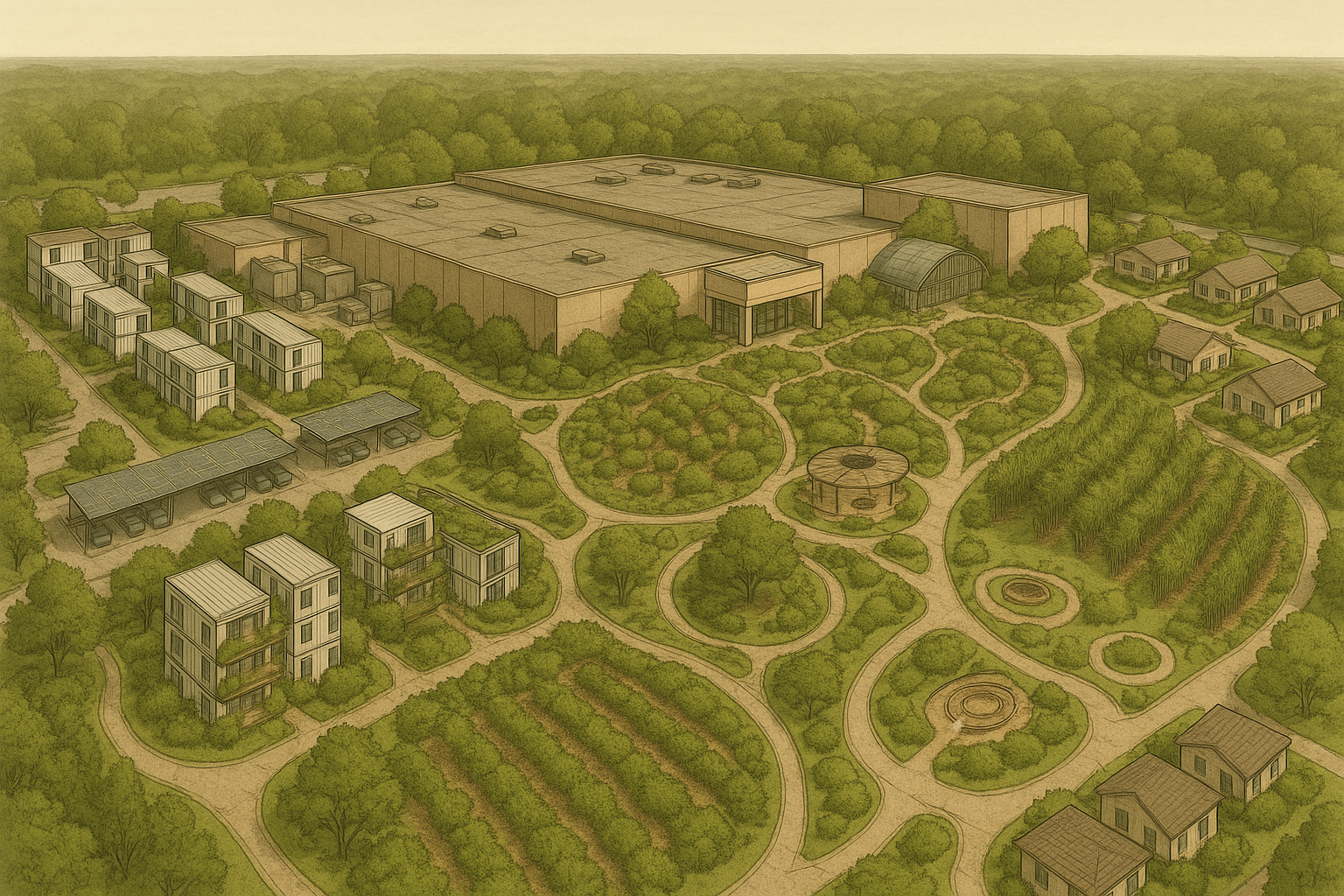
Malls, civic buildings, or industrial shells are retrofitted into multi-use sites that include small business incubation, hands-on education programs, transitional housing, and community-accessible services—all operated with shared infrastructure and clear time-bound pathways for growth.
Why it matters: It keeps cultural identity and local assets in use. Instead of tearing down and starting over, communities get leverageable space that’s purpose-built to meet current needs—at a fraction of the cost and environmental impact.
When combined, these systems don’t just activate a building—they activate people. Regeneration Centers give communities the structure, revenue, and shared purpose needed to move from survival to sovereignty—making revitalization real, measurable, and lasting.
De-Risk Local Growth
Too many businesses collapse because they can’t afford to adapt. By offering time-bound incubation and shared infrastructure, Regeneration Centers give builders room to grow without burning out.
Anchor Regenerative Work
Not every town needs a new building—but they do need a place where regenerative business, education, civil service internships, and civic work can be organized, supported, and seen. The Center becomes that anchor.
Keep Resources in the Loop
From food to energy to materials, most communities export value and import waste. Regeneration Centers reverse that flow—keeping resources circulating and value local.
Restore the Commons
Real connection comes from shared space, shared decisions, and shared investment. Regeneration Centers rebuild trust by making the commons visible, useful, and worth protecting.
Shared Community Infrastructure
Each Regeneration Center is designed to be a living asset for the community—not a closed campus. That means including flexible spaces and tools that reflect what people actually need access to in their everyday lives:
-
Test Kitchen & Food Prep Facilities
A certified shared-use kitchen available for cooking classes, food businesses, community meals, and nutritional programs. It supports food entrepreneurs and public education alike. -
Club Space & Gathering Rooms
Comfortable indoor spaces for meetings, classes, book clubs, and small-scale events. These “third spaces” help rebuild the civic muscle of rural and urban communities. -
Outdoor Commons & Garden Space
Flexible green areas for farmers’ markets, outdoor learning, seasonal celebrations, and casual community gathering. Often tied into food education, permaculture, or wellness. -
Tool Library & Repair Bench
Borrow tools, fix what’s broken, and learn new skills. Supports household resilience and local maker culture while lowering consumer costs. -
Digital Access & Resource Hub
WiFi, printers, software labs, and support for completing applications, forms, and resumes. Particularly valuable in underserved broadband areas. -
Youth Corner & Elders’ Nook
Spaces intentionally designed for multigenerational learning, storytelling, tutoring, and intergenerational care.
Why It Matters
The systems that shaped our towns — zoning laws, industrial land use, suburban sprawl — were built for efficiency, not resilience. They’ve left communities fragmented, resource-strained, and vulnerable to economic and environmental disruption.
Regeneration Centers change that—not by offering a finished solution, but by creating the conditions for one to emerge. They combine clean energy revenue, cooperative governance, and repurposed space into a single platform where local ideas, talent, and leadership can grow. With shared infrastructure and a grant arm to fund community-led efforts, they provide the scaffolding needed to support what the old systems never made room for.
These centers aren’t the end goal. They’re the stepping stone—toward regenerative economies, resilient neighborhoods, living ecosystems, and a future where rural communities are no longer treated as resources to extract, but as places to invest, evolve, and thrive.
Waste To Community?
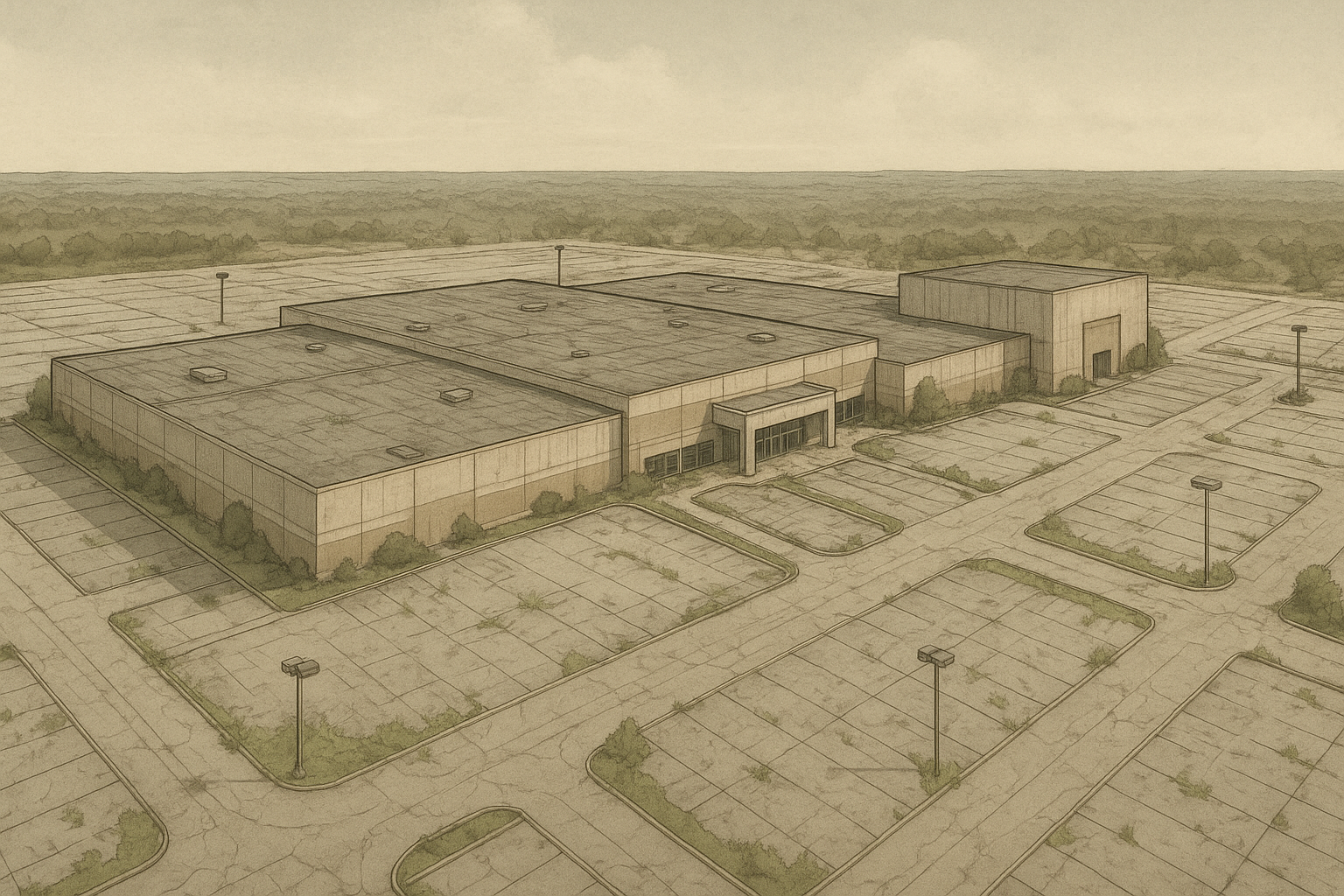
Did you know there are over 700 abandoned malls in the United States?
What if even a handful of them became the heart of a new kind of community?
Imagine turning empty asphalt into food forests. Vacant storefronts into workspaces. Dormant anchor stores into learning hubs, fabrication centers, or neighborhood-scale energy plants.
What if instead of extracting value from a place, we cultivated it?
What if our built environment didn’t just serve commerce — but regeneration, resilience, and belonging?
This is the opportunity: to take what’s been left behind and reimagine it as the foundation for what’s next.